Repair Thin and Bare Patches
Once the soil is moist and workable and the grass is growing again, you can repair thin or bare areas with lawn seed.
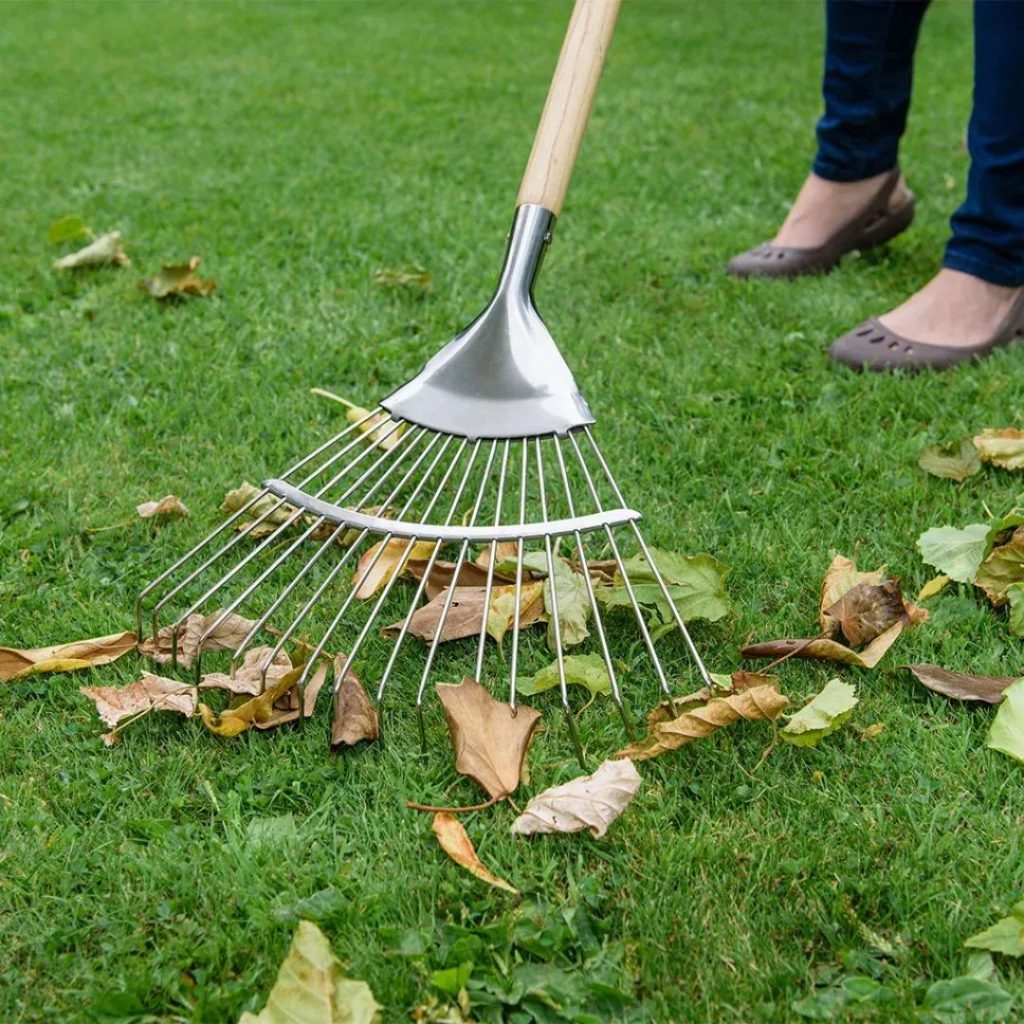
Rake the area to remove dead material and loosen the surface. Choose a seed mixture suited to your garden and the way your lawn is used:
- For a busy family lawn, look for a hard-wearing mixture that can cope with regular use.
- For a dry, exposed or lower-maintenance lawn, look for deeper-rooting grasses.
- For a finer lawn or an area with some shade, choose a mixture designed for those conditions.
Apply the seed at the rate shown on the pack, then lightly rake it into the surface so it makes good contact with the soil. Keep the area moist while the seed germinates, without making it soggy or washing the seed into piles. Always follow any local watering restrictions.
Wait until the new grass reaches around 7–8 centimetres before mowing it for the first time. Use a sharp blade on a higher setting and remove only the top third of the growth.
Take Care With Weeds, Moss and Feed
Not every lawn needs a treatment. A few weeds can often be removed by hand, while improving drainage and reducing shade may help prevent moss from returning.
If you use a weed or moss treatment, make sure it is suitable for the problem and the condition of your grass. Products intended for established lawns may damage young seedlings, so always check how long you should wait before or after sowing seed.
If your lawn needs feeding, choose a product made for autumn rather than a high-nitrogen summer feed. Measure the lawn and apply only the amount recommended on the pack. A spreader can help you achieve an even application and avoid overlapping, which may scorch the grass.
Combined autumn feed and moss-control products are intended for established lawns. Leave newly sown areas untreated unless the label clearly states that the product is suitable for them.
A Few Things to Avoid
Try to avoid:
- Scarifying heavily while the lawn is dry, heat-stressed or waterlogged.
- Cutting recovering or newly established grass too short.
- Applying treatments without checking how they affect new seed.
- Using more seed, feed or treatment than the pack recommends.
- Allowing new seed to dry out or using so much water that it washes away.
Your Autumn Lawn Checklist
- Wait for cooler weather and active growth.
- Clear fallen leaves and debris.
- Mow lightly on a higher setting.
- Rake away loose, dead grass.
- Aerate compacted areas.
- Treat weeds or moss only if needed.
- Check treatment labels before reseeding.
- Sow seed into thin and bare patches.
- Keep new seed consistently moist.
- Wait until it reaches 7–8 centimetres before mowing.
A Little Care Through Winter
Once the main autumn work is complete, continue clearing fallen leaves so they don’t block the light or trap moisture.
Mow only while the grass is still growing and the ground is firm enough to avoid damage. Try not to walk across the lawn when it is waterlogged, frosted or frozen.
It’s also worth noting any areas that stay wet, shaded or compacted. These underlying problems can then be tackled when growing conditions improve in spring.
A little well-timed care now can help a tired lawn recover from summer and put it in a stronger position for the months ahead.
Need a Little Help?
If you’re not sure what your lawn needs, pop into Goulds and have a chat with our friendly garden centre team. If you can, bring a photograph of the problem and a rough idea of your lawn’s size. We’ll help you choose the right approach, and the right products, to get your autumn lawn care off to a good start.
A quick safety reminder: Always read the label and product information before using lawn treatments. Keep people and pets away from treated areas for the period shown on the label, and avoid using garden chemicals where they could run into ponds, drains or watercourses.